Showing posts with label planet earth. Show all posts

14 Jan 2013

Sea Levels Could Rise Substantially More Than Previous IPCC Reports Have Predicted


The seas of the world could rise substantially more in the future than has been previously predicted in IPCC reports. This is primarily because the the Greenland and Antarctic ice sheets are likely going to melt considerably more than was previously estimated by the IPCC, new research from the University of Bristol has found.


This research is the “first of its kind on ice sheet melting to use structured expert elicitation (EE) together with an approach which mathematically pools experts’ opinions. EE is already used in a number of other scientific fields such as forecasting volcanic eruptions.”
Antarctica and Greenland are covered in enormous ice sheets that contain around 99.5 percent of the world’s glacier ice. If this was all to melt, global sea levels would rise by an incredible 63 meters, or about 207 feet. “The ice sheets are the largest potential source of future sea level rise — and they also possess the largest uncertainty over their future behaviour. They present some unique challenges for predicting their future response using numerical modelling and, as a consequence, alternative approaches have been explored.”
“One such approach is via carefully soliciting and pooling expert judgements — a practice already used in fields as diverse as eruption forecasting and the spread of vector borne diseases. In this study Professor Jonathan Bamber and Professor Willy Aspinall used such an approach to assess the uncertainties in the future response of the ice sheets.”
“They found that the median estimate for the sea level contribution from the ice sheets by 2100 was 29cm with a 5 per cent probability that it could exceed 84cm. When combined with other sources of sea level rise, this implies a conceivable risk of a rise of greater than 1m by 2100, which would have deeply profound consequences for humankind. The IPCC’s report provided figures ranging from 18cm to 59cm for six possible scenarios.”
“The researchers also found that the scientists, as a group, were highly uncertain about the cause of the recent increase in ice sheet mass loss observed by satellites and equally unsure whether this was part of a long term trend or due to short-term fluctuations in the climate system.”
Professor Bamber said: “This is the first study of its kind on ice sheet melting to use a formalized mathematical pooling of experts’ opinions. It demonstrates the value and potential of this approach for a wide range of similar problems in climate change research, where past data and current numerical modelling have significant limitations when it comes to forecasting future trends and patterns.”


7 May 2012

Super moon photos may 2012

The Moon  seemed especially big and bright since it  reached its closest spot to Earth at the same time it is in its full phase


6 May 2012

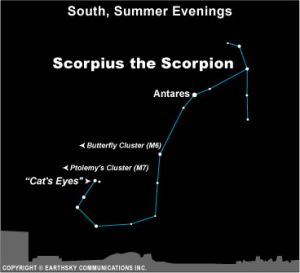
Bright moon near bright star Antares on May 6


Wow. Who knew a supermoon could be so exciting? Thanks for everyone who posted their great images from around the world on EarthSky’s Facebook page, and for all your wonderful comments and observations. Tonight’s moon – May 6, 2012 – will still look full, but it’s really a waning gibbous moon that lights the sky. You’ll find tonight’s moon near a bright star, red Antares in the constellation Scorpius, sometimes called the Heart of the Scorpion.


What time will the waning moon rise? The exact time depends on your location on the globe, and you can find some recommendations for sky almanacs here. For most of us, though, the moon will rise tonight as darkness is falling across your part of Earth. If your horizon is cluttered with trees, buildings or other obstacles, you’ll have to wait a few to several hours after sunset for the brilliant moon to rise higher in the sky.


Once you have the moon well in sight, say around 10 to 11 p.m. this evening (your local time), look below it for a nearby bright star. Tonight the moon appears on the sky’s dome near bright Antares, the ruddy Heart of the constellation Scorpius the Scorpion. Antares is a red supergiant star. It’s red because its outer layers are cool – at least cooler in contrast to other stars. Although it appears as a mere pinpoint of light in our night sky, Antares is so large that if it were to take the place of our sun, its outer layers would extend beyond the orbit of Mars.


By summer, Antares will be prominently placed in the early evening sky. If you have a darker sky, with no moon, you'll easily see its constellation, which features a pattern reminiscent of a real scorpion's curved tail.
Antares’ red color might be hard to discern on May 6, 2012 next to the spotlight of the big and brilliant moon. So note this star’s location tonight in the east in the evening. And notice the pattern of stars around it. Then come back to this star when the moon has moved away, and you’ll clearly see how red it is – and how fiercely it twinkles when it’s low in the sky.


Antares is known for twinkling madly and displaying glints of other colors. When a star lies low in the sky, we see it through much more air than when the star is closer to overhead. Earth’s atmosphere is what causes stars to twinkle, so stars seen low in the sky – like Antares in the evening now – twinkle more fiercely.

Bottom line: Use the moon to find Antares, the Heart of the Scorpion in the constellation Scorpius, on May 6, 2012. After the excitement over last night’s full supermoon, the moon is now waning. But it’ll still look round and full in your night sky, and it’ll be beautiful near this star.


24 Jun 2011

Global Warming Warns! Let’s work together to conrol it.


Global warming is the increase in the average temperature of the Earth’s near-surface air and oceans in recent decades and its projected continuation. Global warming is a very serious issue. The future would be very terrible if we don’t take any action to reduce it right away.
We need to control global warming to reduce the future risk. I know we all know this but we never actually implement it. Please read it, leave your feedback & share this story with your friends. Let’s work together to control global warming & reduce future risk.
#> Use Public Transport:
public transport
Public transport, public transportation, public transit or mass transit comprises all transport systems in which the passengers do not travel in their own vehicles. While it is generally taken to include rail and bus services, wider definitions would include scheduled airline services, ferries, taxicab services etc. any system that transports members of the general public. A further restriction that is sometimes applied is that it should take place in shared vehicles, which would exclude taxis that are not shared-ride taxis.


#> Use Renewable Energy Like Wind Power:
wind power terminal
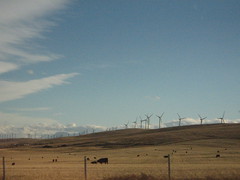
One means of reducing carbon emissions is the development of new technologies such as renewable energy such as wind power. Most forms of renewable energy generate no appreciable amounts of greenhouse gases except for biofuels derived from biomass.
methane power
#> Burn Methane:
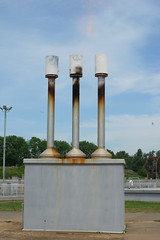
Burning Waste Methane. Methane is a much more powerful greenhouse gas than carbon dioxide. Burning one molecule of methane generates one molecule of carbon dioxide. Accordingly, burning methane which would otherwise be released into the atmosphere (such as at landfills, coal mines, waste treatment plants, etc.) provides a net greenhouse gas emissions benefit.
#> Use Smart Cooler, Heater & Air Conditioner
About half the energy we use in our homes goes to heating and cooling. Changing air filters annually, having your system checked annually and useing a programmable thermostat are all easy things you can do. Just by using a programmable thermostat, you can save about 1,800 pounds of carbon dioxide a year and about $100 a year in energy costs. If you want to go the extra mile, see “Bonus Tips” below for how to purchase green power.
car
#>Tune up and maintain vehicles properly
Unscientific maintain of vehicle leads to environment pollution. Vehicles, regardless of category are increasing day by day all over the world. The smoke released by these vehicles damage ozone layer. But it is impossible to stop the arrival of new vehicles. What can be done to the maximum is, to maintain the vehicles properly. Adopting scientific method to maintain your loved cars and bikes will play predominant role in controlling global warming.


#>Clean the air in your house.
home
Cleaning the air inside the house is most important thing. By doing so you will automatically contribute for global warm control. There are many things you can do to clean your house. Use proper vacuum cleaner for the purpose. Clean regularly and continuously. Put dust avoiding curtains and use houseplants. Do not keep the dustbin unchecked. lso don’t mess the surroundings of your house. Even take maximum care while dispatching waste materials. Try to grow as much as saplings inside your compound.
bulb
#> Reduce electricity usage to the maximum
Switch off unwanted electric equipments immediately. Or do not use them if not necessary. Often we find shining tube, unning fan, running TV…etc. One may be sound enough to pay the electric bill in the end of the month, but what about the energy that has been wasted? Replace the old ones with energy efficient lighting. Also, improve the efficiency of ome appliances. If not possible, go for an energy saving appliances.


#>Prefer recycling 
recycle
Preferring reusable products instead of disposables will help in reducing the waste. When you buy a product, make sure that the packing is quite reasonable one. In other words, packing should not exceed the size of the product. Always try to recycle household waste. By recycling the household waste, one can save 2,400 pounds of carbon dioxide annually.Here both the entrepreneurs and public should join hands together for a cause. Always try to educate others on preferring recycling products.


New solar system found!


NASA's Kepler space telescope has picked up multiple planets in a system with a star much like the sun, the largest group of transiting planets yet discovered.
The system is very different from the one we call home. The star, about 2,000 light years away, is very much like the sun, but the planets around are in fast, tight orbits. One takes as little as ten days. Five of the six are closer to their sun than Mercury is to ours.
Many of the solar systems discovered have been the homes of Jupiter-sized planets in eccentric orbits. Those types of systems are much easier to see, because a big planet's effects on the parent star are more visible. Kepler is designed to seek out planets closer in size and mass to Earth.
In this case, Kepler found six planets, all of them transiting the face of the star, called Kepler-11. The planets, in order of their distance from the star, are Kepler-11b, 11c, 11d, 11e, 11f and 11g. Kepler 11b is at about 9 million miles from its sun. The outermost one is on the order of 45 million miles out.


save water. its simple!!


·        Turn the tap off when not in use especially when you brush your teeth or wash clothes.  Avoid leakage of water from the taps.
·        Rainwater harvesting is the another method to conserve water.
·        The water supply should be limited in those areas which enjoys the unlimited water supplies.
·        Check the leakage of water in the toilets. Also get check the hidden water leaks.
·        Educate the mind of the people in the rural areas to save the water.
·        Promote the conservation of water through media and wall posters.
·        Never throw the water unnecessary on roads which can be used for gardening and cleaning.
·        Avoid unnecessary flushing the toilets. Dispose off the tissues, cigarettes and other waste into the bin instead of toilets.
·        Use minimum amount of water to bath.
·        Water Waste restrictions.
·        Improvement in the water distribution system.
·        Water your lawn only when it is needed.
·        Use a broom instead of hose to clean the sidewalks or to wash the car.
·        Capture the water that is leaking and repair it as soon as possible.
·        You can use washing machine to wash clothes that does not consume much water.
·        Donot leave the tap running while washing the dishes in the kitchen.
·        Install small shower heads to reduce the flow of water.

Benefits to Conserve water :
·        If you save water it can save your money bills.
·        Reduction in interior water use cuts waste water flows, especially overflowing of gutters which contaminates the environment.
·        Environment benefits include eco system and habitat protection.
·        Water conservation helps in improving the quality of your drinking water.


Space explorations keeps us closer and safer on earth


The Coalition for Space Exploration, a collective of many prominent, established aerospace firms has released the second part of its “Think Outside the Circle” campaign that highlights the positive influence of space exploration on our everyday lives.
The latest installment is called “Closer and Safer” and discusses how how space-based technology has improved the quality of living of so many down here on Earth, helping out in cases of emergency like fires and hurricanes and in more personal matters like eye surgery.
The release of this public service announcement coincided with the final launch of space shuttle Endeavour which took place on May 16. The campaign’s purpose is to garner support among the general population as well as the U.S. leadership.
“We enjoy a myriad of real benefits each day as a result of space exploration,” said Coalition Chairman Glenn Mahone. “Our intention is to not only inform viewers about these benefits, but cause them to think in new ways – outside the circle of Earth – and ask, ‘What’s next? What would our lives be like without these technologies?”


Why NASA chose potentially threatening Asteroid for New Mission


An artist's interpretation of NASA's asteroid-sample mission OSIRIS-REx, which will rendezvous with the near-Earth asteroid designated 1999 RQ36 in 2020. The mission is expected to launch in 2016.

         When it comes to visiting asteroids, NASA doesn't pick run-of-the-mill space rocks. The target of NASA's latest asteroid mission is not only thought to be rich in the building blocks of life, it also has a chance — although a remote one — of threatening Earth in the year 2182.
         The asteroid 1999 RQ36 is the target of a new unmanned spacecraft, which NASA plans to launch in 2016 to collect a sample from the space rock and return it to Earth by 2023.
        The mission's leaders spent a long time surveying possible destinations for the mission, and finally settled on 1999 RQ36. NASA calls the mission OSIRIS-Rex, which is short for Origins-Spectral Interpretation-Resource Identification-Security-Regolith Explorer.
       "We went through a whole series of selection criteria," OSIRIS-Rex's deputy principal investigator Dante Lauretta, a planetary scientist at the University of Arizona, told SPACE.com. "There are over 500,000 asteroids known. [1999 RQ36] looks really optimum." [Video: The OSIRIS-Rex Mission to 1999 RQ36]

A Potentially Dangerous Asteroid:

        In addition to digging up clues about our solar system's history, the OSIRIS-Rex mission may be able to help Earth fend off potentially deadly space rocks. That's because asteroid 1999 RQ36 — which is about 1,900 feet (580 meters) wide — is public enemy No. 1 for space rock scientists.
"1999 RQ36 has the highest probability of impacting the Earth of any known Potentially Hazardous Asteroid," according to a mission proposal submitted to NASA by the OSIRIS-Rex in 2009. 

Infographic: How the OSIRIS REx Asteroid sample return Mission will work?


      A recent calculation found that the asteroid has a 1-in-1,800 chance of hitting Earth in the year 2170, and a 1-in-1,000 chanceof slamming into us in 2182.
     While those are slim odds, they put 1999 RQ36 at the top of the danger list.
"I wouldn't go buy asteroid insurance," Lauretta said. "We're OK for 150 years or so. We're not saving the Earth from immediate danger."
      Still, he said studying the asteroid and its orbit up close could help us better predict the risk, and outline a strategy to protect ourselves if necessary. [Photos: Asteroids in Deep Space]

Artist's concept of anchoring to the surface of an asteroid

      One reason the likelihood of Earth impact can't be better predicted is because scientists don't fully understand the Yarkovsky effect, which causes asteroids to accelerate slightly when they absorb sunlight and then re-emit it as heat.
      "[1999 RQ36's] orbit is currently well known because of optical and radar data but the long-term motion is less well understood because of the poorly defined Yarkovsky effect," said Donald Yeomans, manager of NASA's Near-Earth Object Program Office, who is not directly involved with the OSIRIS-Rex mission. "This mission should allow a much better understanding of these effects once the asteroid's size, mass, rotation characteristics and thermal properties are studied."

Target: Asteroid 1999 RQ36:

      One of the most attractive features of asteroid 1999 RQ36 for scientists is its size: It is as large as five football fields, which means it won't be spinning too fast when OSIRIS-Rex approaches. The asteroid should also have a large supply of lose dirt, or regolith, on its surface for easy sampling.
1999 RQ36 is thought to be carbonaceous, or rich in carbon and organic material, and likely to contain some of the building blocks of life, such as the amino acids used to build the proteins vital to life on Earth.
      "We cannot tell from telescopes exactly what kind of material, but we believe it's the sort of stuff that came in through the Earth's atmosphere after liquid oceans first formed, perhaps by 4.45 billion years ago, and provided those building blocks," said OSIRIS-Rex principal investigator Mike Drake of the University of Arizona, during a news conference yesterday (May 25).
       In fact, the asteroid is a primitive B-class carbonaceous asteroid, a class that has never been studied up close by a spacecraft before, and should provide an unprecedented opportunity to learn about the history of the solar system and the origin of life on Earth.
       The material inside 1999 RQ36 is thought to date to the very formation of our solar system around 4.56 billion years ago. While the space rock now orbits relatively near Earth — making it a convenient target for visiting — scientists think it is a fragment of an even larger asteroid that collided with another rock in the main asteroid belt between Mars and Jupiter, a few million years ago.

Building on asteroid successes:

       The OSIRIS-Rex mission is not NASA's first mission to an asteroid, but it will be the first U.S. probe to retrieve samples and return them to Earth. Only Japan's Hayabusa spacecraft, which returned samples of the asteroid Itokawa to Earth in June 2010 after a seven-year journey, has performed a similar feat.
        NASA has sent probes to visit asteroids before. The agency's NEAR spacecraft rendezvoused with the asteroid Eros and ultimately touched down on that space rock at the end of its mission in February 2001.
       NASA's Dawn probe, meanwhile, is nearing the asteroid Vesta — the second-largest space rock in the asteroid belt. Dawn will orbit Vesta for many months, then head off to visit Ceres, the largest asteroid in the solar system.
       But the NEAR and Dawn missions are only visiting asteroids. OSIRIS-Rex will bring pieces back home. And that has scientists brimming with anticipation.
"Asteroid 1999 RQ36 is a perfect target for sample return and I can't wait to see the exciting results from both the in situ science activities and the sample return analysis," Yeomans said.


RECYCLE PLASTIC? yeah, sure!


        When was the last time you bought a drink in a plastic bottle at the gas station? Chances are, you threw out that bottle when you were done—without a second thought. That’s what most of us do, even though all plastics can be recycled—and there are serious environmental consequences for throwing them away. Here are a few reasons why you should recycle that plastic drink bottle next time, instead of tossing it in the trash.

Plastic bottles take up space in landfills. Our country’s landfills are closing at a rate of around two per day. The landfill-space crisis is especially problematic in cities, where inner-city trash dumps are often filled to capacity, and surrounding communities are unwilling to allow new landfills to come to their neighborhoods. Many coastal cities use the ocean as a dumping ground, resulting in depleted fish stock, polluted beaches, and other health issues for the inhabitants. Plastic bottles make up approximately 11% of the contents of landfills.

Incinerating plastic contributes to greenhouse gases. To save space at landfills, plastics are often burned in incinerators. When this is done, chemicals, petroleum, and fossil fuels used in the manufacturing process are released into the atmosphere, adding to greenhouse gas emissions.

Plastic in the oceans is responsible for the deaths of millions of sea animals. Plastic bottles floating on the surface of the oceans can look like food to larger sea life—often with fatal consequences. In addition, fish, sea birds, and other ocean creatures often get caught in plastic rings that strangle them or constrict their throats so that they cannot swallow.

Plastic takes a long time to degrade. Nobody is quite sure how long it takes for plastic to biodegrade—it hasn’t been around long enough, and the first plastics made are still around today. Scientists believe, however, that plastics will take hundreds of years to degrade fully—if not longer. Plastics as we know them have only been around a hundred years, and they are already a problem. Imagine five hundred years’ worth of plastics in our landfills.

Plastics contain harmful chemicals. These include cadmium, lead, PVC, and other pollutants in the form of artificial coloring, plasticizers, and stabilizers. Some of these have been discovered to be harmful and are not in currently-manufactured plastics, but the older, more toxic plastics are still filling up our landfills and floating around in our oceans, releasing pollutants into the environment. These can seep into groundwater from landfill runoff and cause health risks for both wildlife and humans.

Recycling plastic saves energy. Studies show that the energy saved by recycling a single plastic bottle—as compared to producing a new one from scratch—is enough to power a single 60-watt bulb for six hours. Think of those all the million bottles thrown away per hour in the country—we could practically power our homes on the energy savings we’d gain by recycling every one of those plastic bottles.

Recycled plastic is useful. Recycled plastic is found in many unexpected places—including carpeting, the fuzz on tennis balls, scouring pads, paintbrushes, clothes, industrial strapping, shower stalls, drainpipes, flowerpots, and lumber. It also contains oils that could be recycled and reused as fossil fuels.

The bottom line why we should recyle plastic is this: recycling plastic is a good idea. It’s good for the environment, good for energy savings, good for the health of wildlife and humans alike. So next time you buy a bottle of soda or water, don’t just throw it in the trash. Recycle it—and do one small thing for the environment. If you do this every time you buy a bottled drink, your small contributions will definitely add up to a big difference.

Save trees, plant new, fall in love with them!


saving trees is not a rule it is a resposiblity.
save trees if you want to be alive.
save trees now relax in future

Why save trees?
Trees clean the air. Tree foliage works as a natural air filter of particulate matter such as dust, micro sized metals and pollutants such as ozone, nitrogen oxides, ammonia and sulfur dioxides. Trees take in carbon dioxide and produce oxygen. Combined with the cooling effect of trees, these processes can have a significant impact on reducing smog and overall air pollution.

Trees improve water quality. A healthy urban forest can have a strong influence on our region’s water quality. Tree canopies and root systems slow and reduce storm water runoff, flooding and erosion. Trees also help filter water runoff reducing potential sources of water pollution into our rivers and storm drains.


Trees save energy. Trees cool the air naturally in two ways: through water evaporating from the leaves and direct shade. Homes shaded by trees need less energy for cooling which means lower monthly utility bills in summer and a reduced need for utilities to increase power generation to meet peak load demand.


Trees raise real estate value. Shaded neighborhoods and well-landscaped yards have a positive economic influence on real estate values, timeliness of house sales and neighborhood desirability. Studies report that landscaping speeds the sale of a home by four to six weeks.

Trees are good for business. A series of studies has investigated associations between the urban forest and people’s response to shopping settings. Scientific results suggest that having trees in the business district streetscape is an important investment for a business community. The presence of a quality urban forest positively influences shoppers' perceptions, and probably, their behavior.

SOME WAYS TO SAVE TREES

We can save trees by
  • >reducing the consumption of products made from trees (e.g. paper) 
  • >providing alternate fuel to rural poor for cooking (e.g.bio gas) so as to reduce cutting of trees for fuel wood 
  • >avoiding indiscriminate disposal of plastic products (especially thin plastic pick up bags) so as to allow rain water to percolate into ground and prevent erosion of soil to save the root system of trees 
  • >planning new projects (especially hydel power projects/water storage reservoirs) not involving deforestation/ submergence of forests under water
  • >avoiding any human activity that may cause forest fires 
  • making tours eco friendly 
  • >creating awareness among people about importance of trees and need for their conservation